CN Tower Lower Observation Level
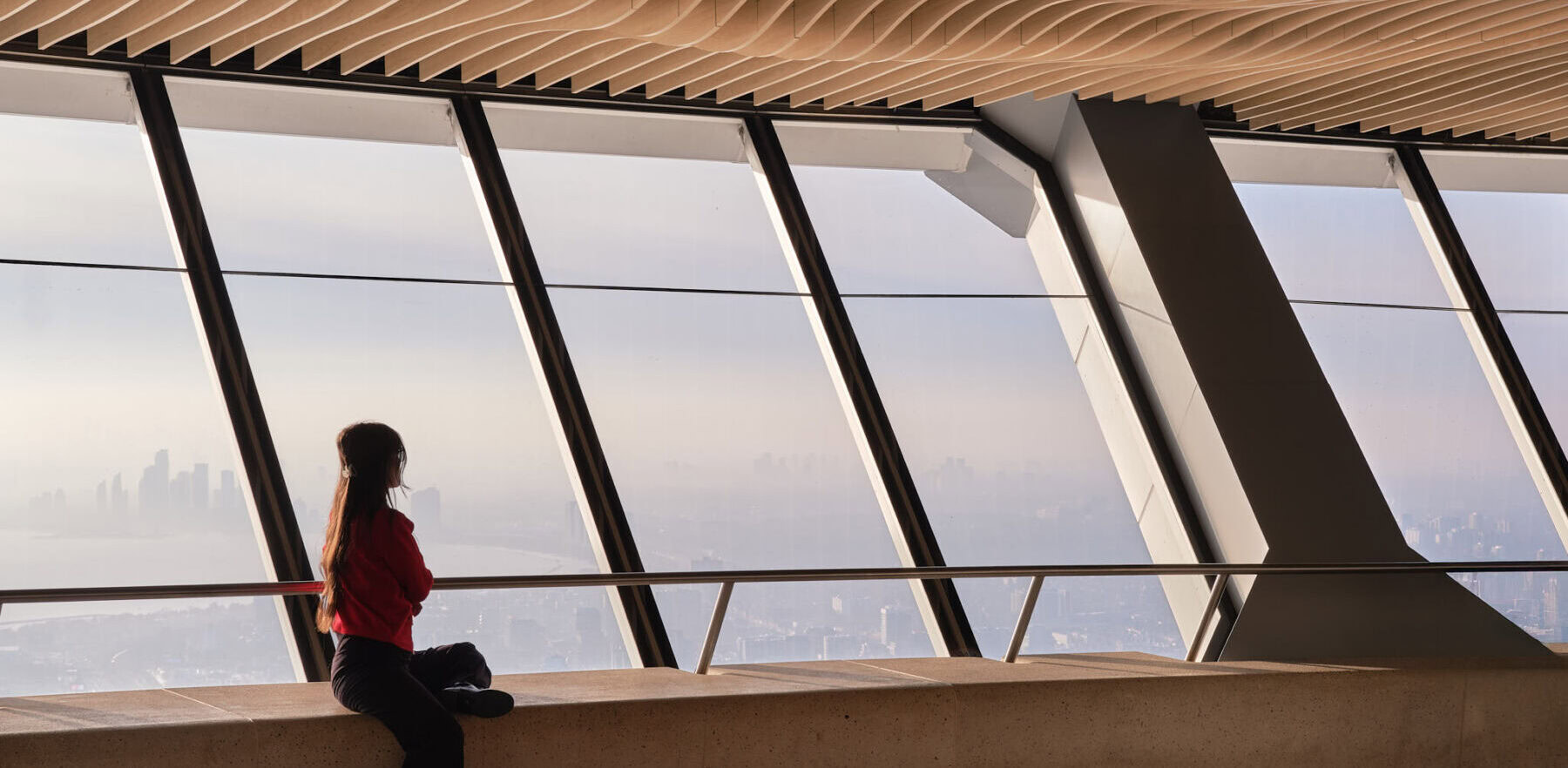
With an undulating ceiling system, new sloped structural glass, durable materials that evoke Toronto’s landscape, and a reimagined outdoor terrace, the revitalized Lower Observation Level at the CN Tower — the first wholesale renovation to this floor since the tower opened — is an exhilarating treetop perch and distinctly Canadian experience.
Project
Description
In 2021, Superkül won the design-build competition with construction lead Boszko & Verity to renovate the CN Tower’s Lower Observation Level. Working in a deeply integrated fashion, our team delivered a fully accessible and completely reimagined interior and exterior experience, including a thinner, stronger, and higher-clarity glass floor and a new perimeter enclosure with more steeply angled glazing, all focused on enhancing visitor experience.
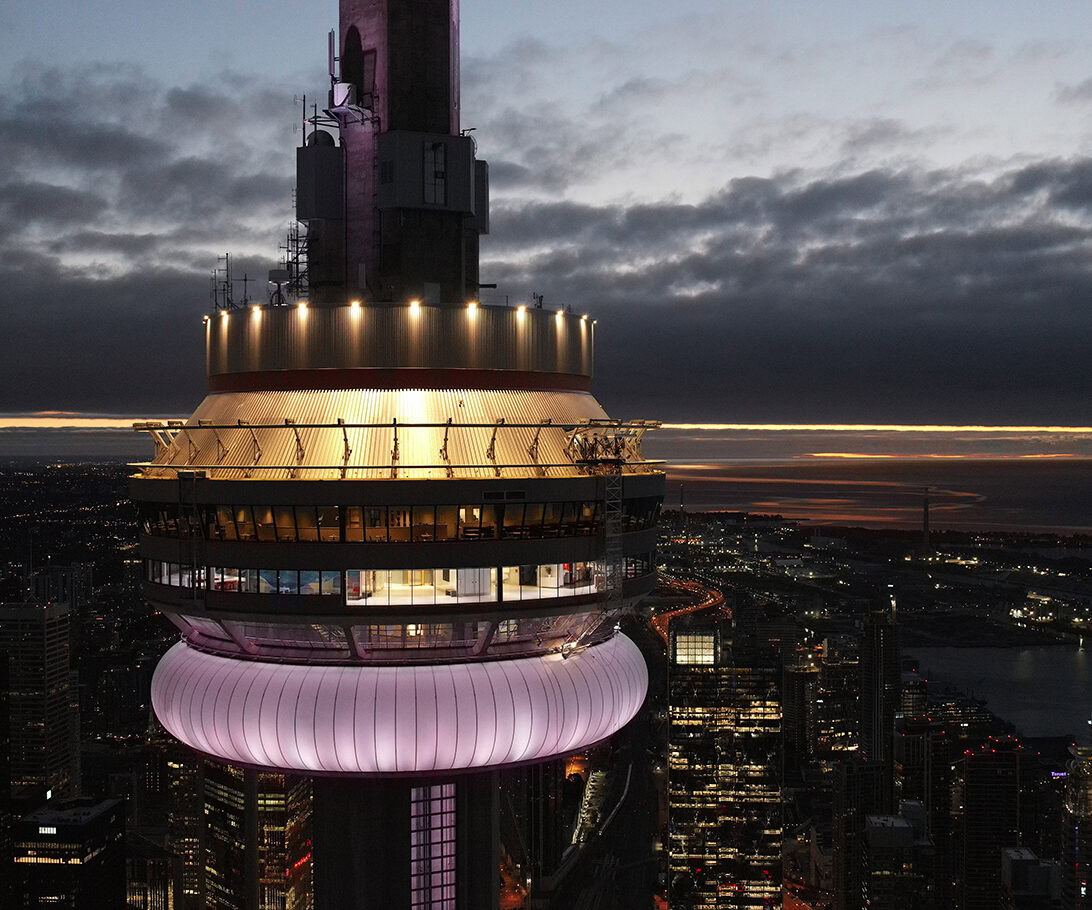
The project challenged us to execute a major feat: create more usable indoor space within the existing footprint while working 342 meters up in the sky under extraordinary logistical and climatic conditions. To accomplish the work, we hoisted a new four-storey permanent maintenance gantry — the first structure of its kind to be lifted by cable since the tower’s completion — and attached it to the tower’s exterior. Our team used the gantry to perform critical interventions, including installing new lights and exterior cladding. Because the tower is listed on the Toronto Heritage Register as a property of historical and architectural significance, we reviewed new exterior envelope components, including the glazing and the cladding, with the City of Toronto to ensure coherence with the existing aesthetic.
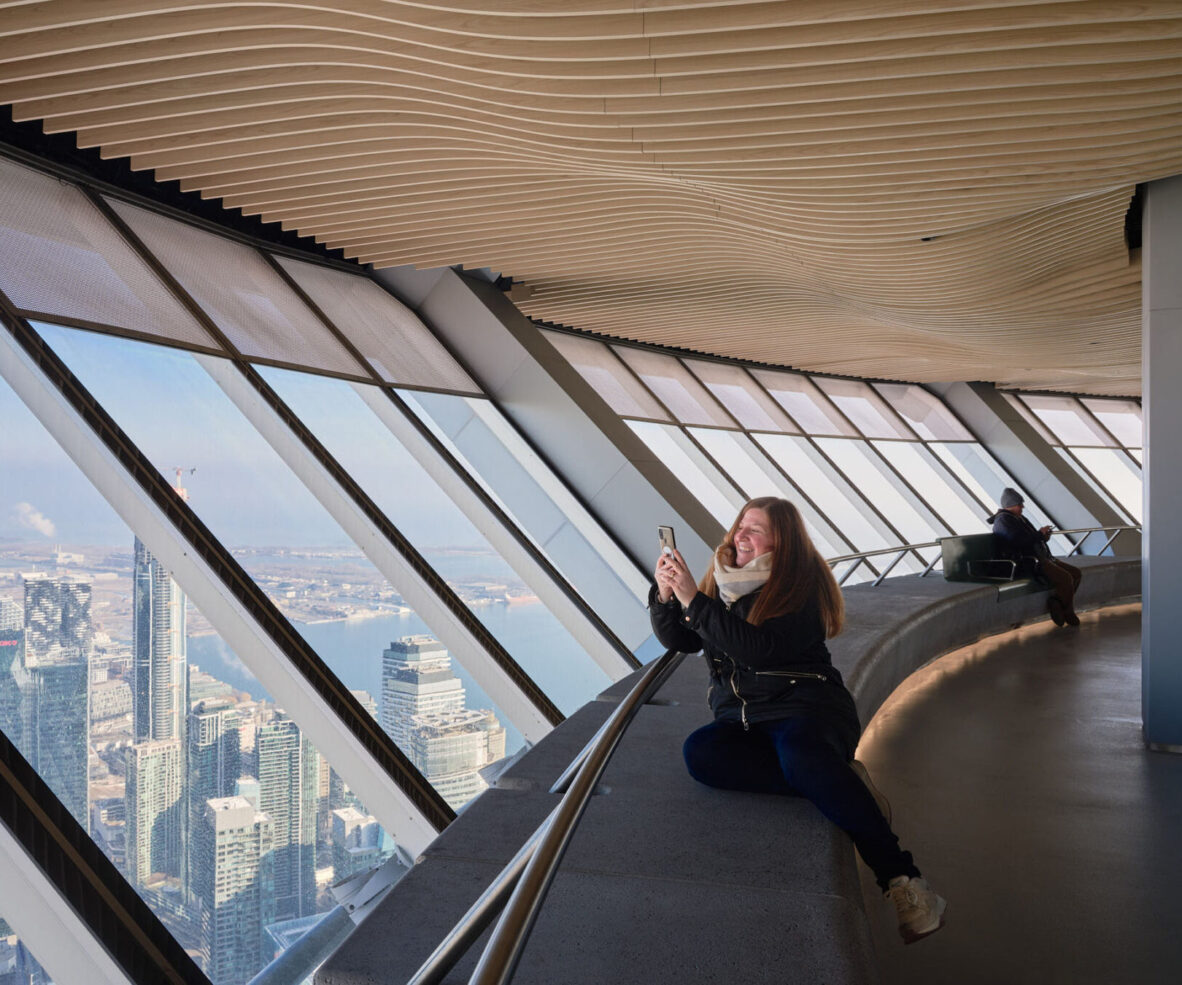
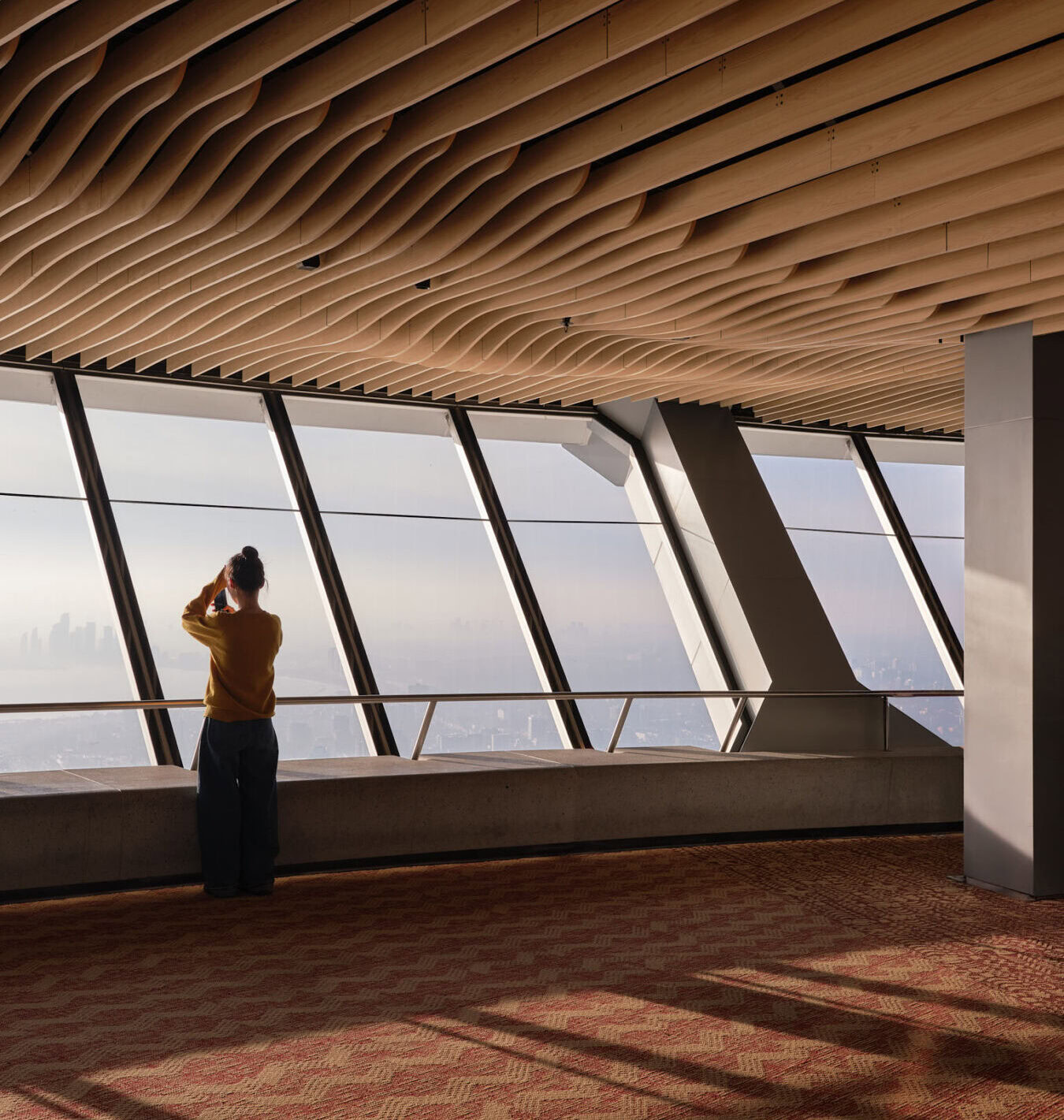
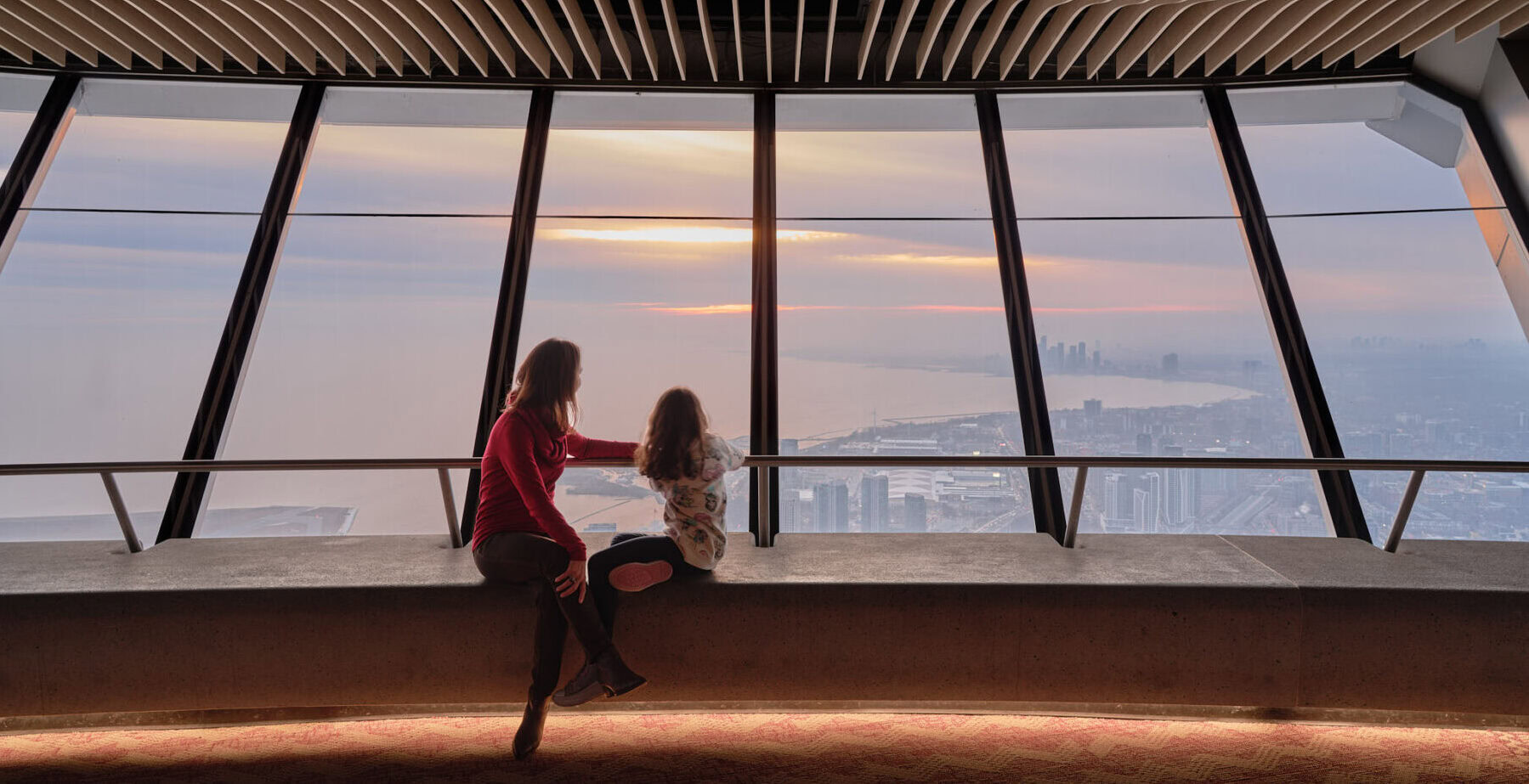
The brief required us to reconfigure the spatial relationship between the indoor program and the outdoor terrace to increase the usable interior area while ensuring a continuous design experience. This entailed removing the steel mesh cage that previously enclosed the entire perimeter and obscured views, and incorporating two-thirds of the tower’s circumference into the interior program. High-strength laminated glass and tailor-made aluminum mullions enclose the perimeter, fastened by custom-engineered movement connections designed to accommodate the tower’s significant central-axis oscillation. The terrace area features fine mesh screens above the glass, creating a tempered outdoor environment. New glazed partitions and doors form an airlock vestibule system that stabilizes airflow and wind pressure differentials, enabling seamless circulation between indoors and outdoors.
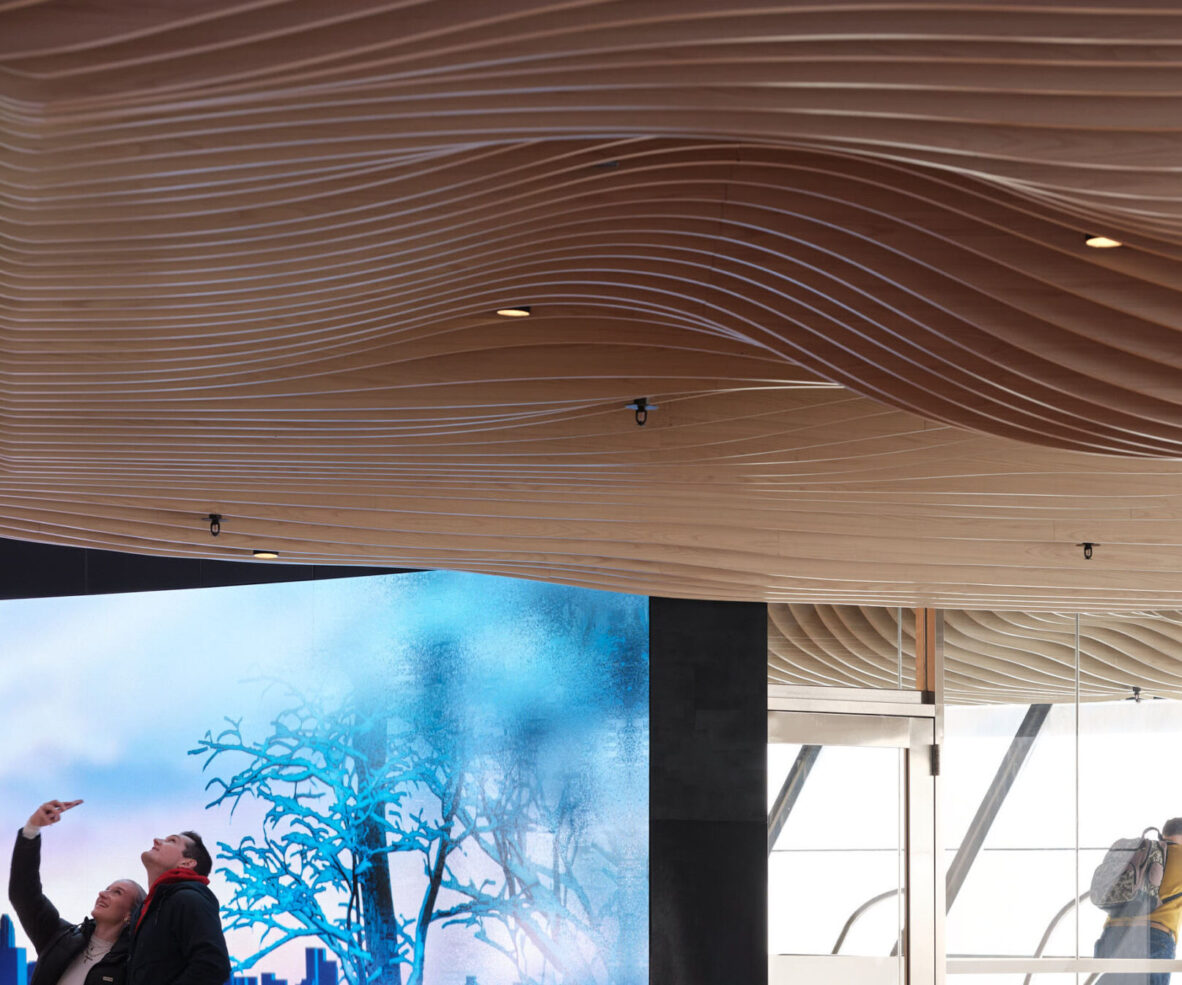
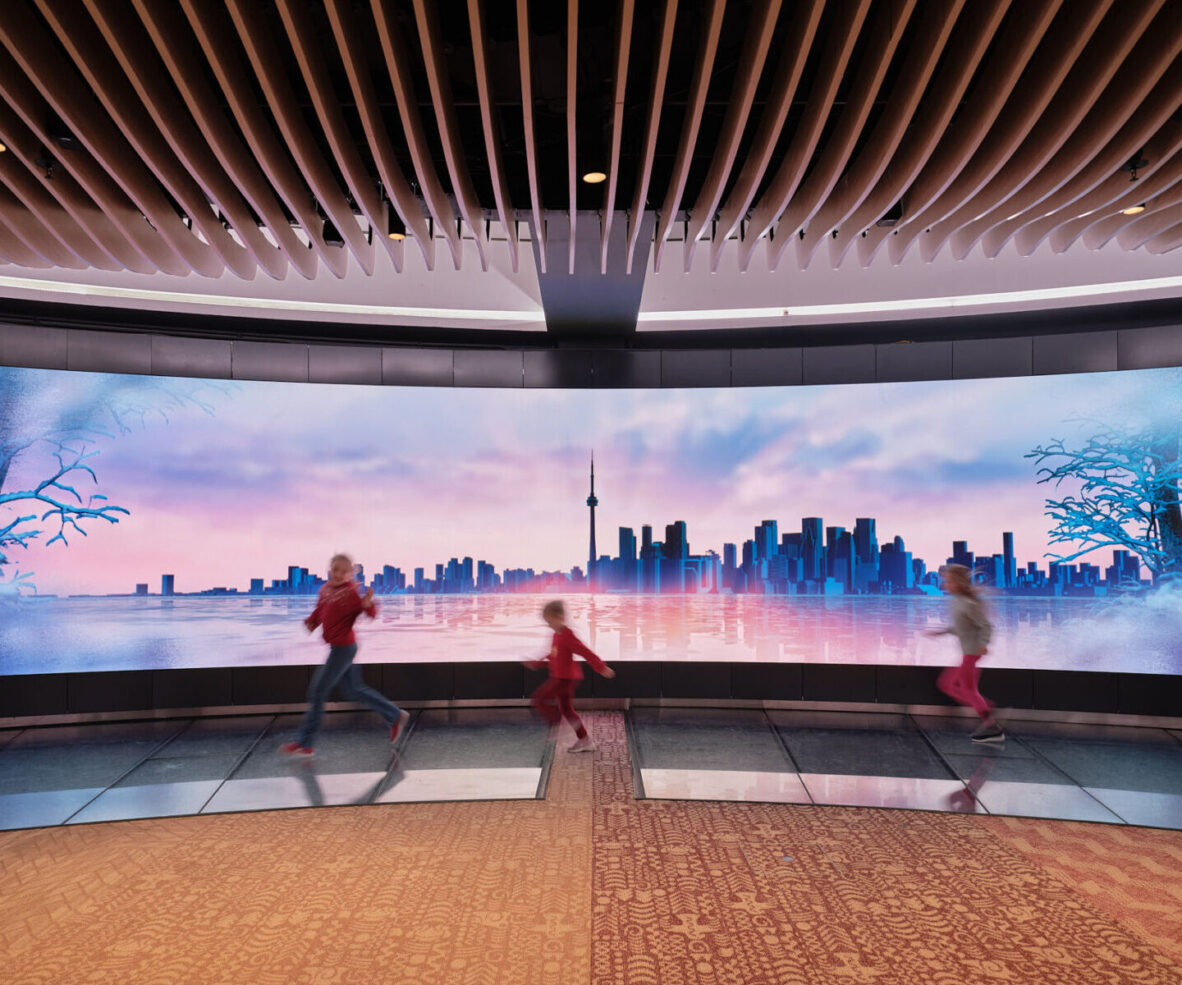
The Lower Observation Level is a vertically compressed space and the tower’s designated emergency assembly area. We were tasked with upgrading the building systems while designing a captivating visitor experience — all within the physical and technical constraints of the existing space. Leveraging the tower’s radial geometry and 360-degree views, the modular ceiling design combines biophilic aesthetics with functional performance in a cohesive system that extends from the interior space through the exterior observation deck. Digitally fabricated fins extend centripetally like the branches of a tree, drawing the eye outward and emphasizing a distinctly Canadian experience: unobstructed views of both Toronto and Lake Ontario — the urban and natural landscape appreciated from every cardinal direction as though perched high in a tree. The oak-laminated phenolic fins, which we fire-tested to ensure they would meet exacting life-safety requirements, introduce warmth while discreetly integrating mechanical, life-safety, and AV systems within the plenum. The modular assembly allows the fins to be removed and reinstalled easily for maintenance access.
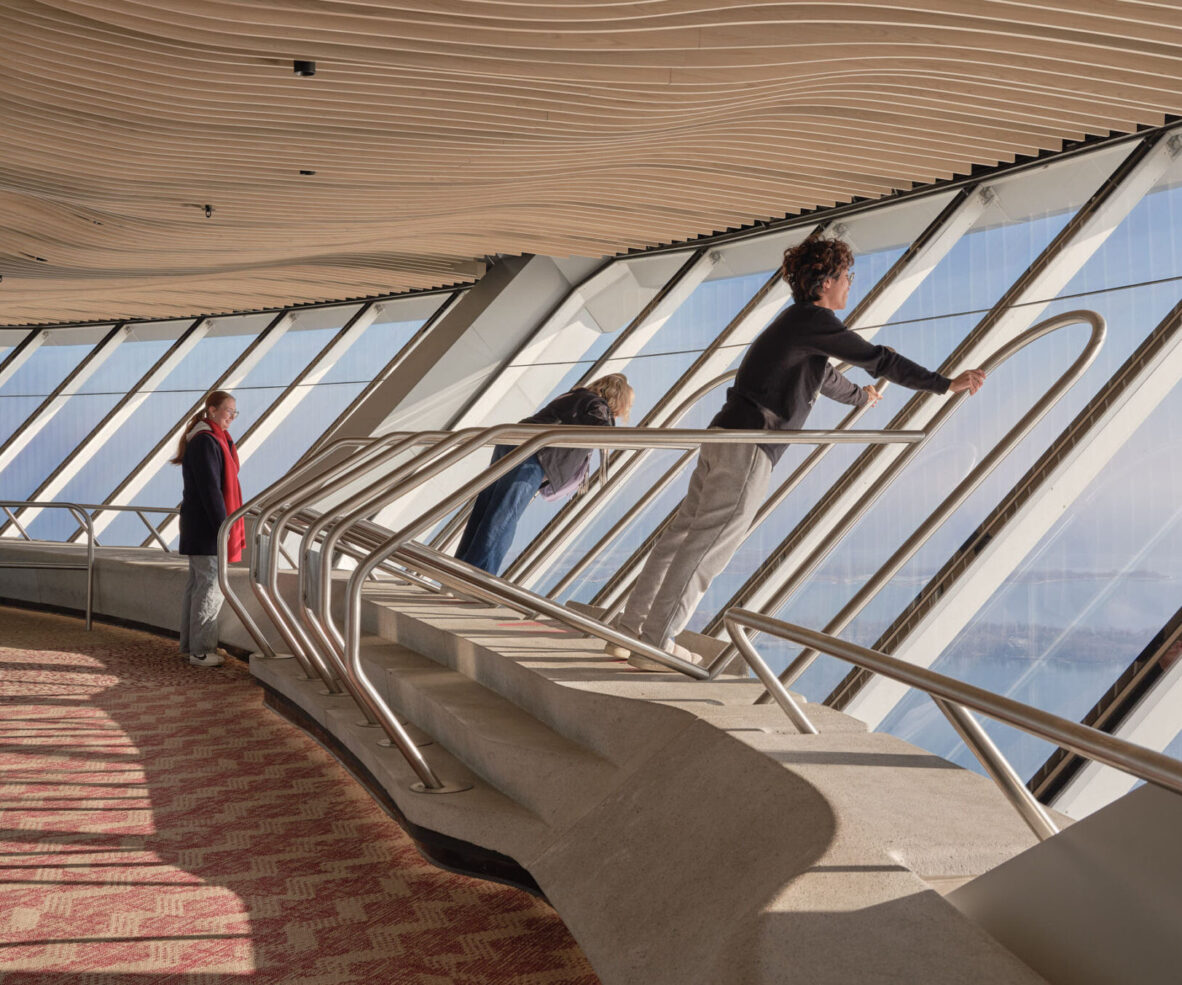
We selected materials that draw inspiration from an arboreal canopy and other natural elements — rocky surfaces, the shimmer of water, the rippling movement of wind — to honour the tower as a monument to Canadian life and ambition. The space features glass-fibre-reinforced concrete seating around the perimeter and OverView — new Tilt Zone viewing areas that allow people to step up onto the ledge, lean out over the floor-to-ceiling glass, and float above the city. Because all materials were brought up using the elevator, the dimensions were dictated by stringent cab and weight restrictions.
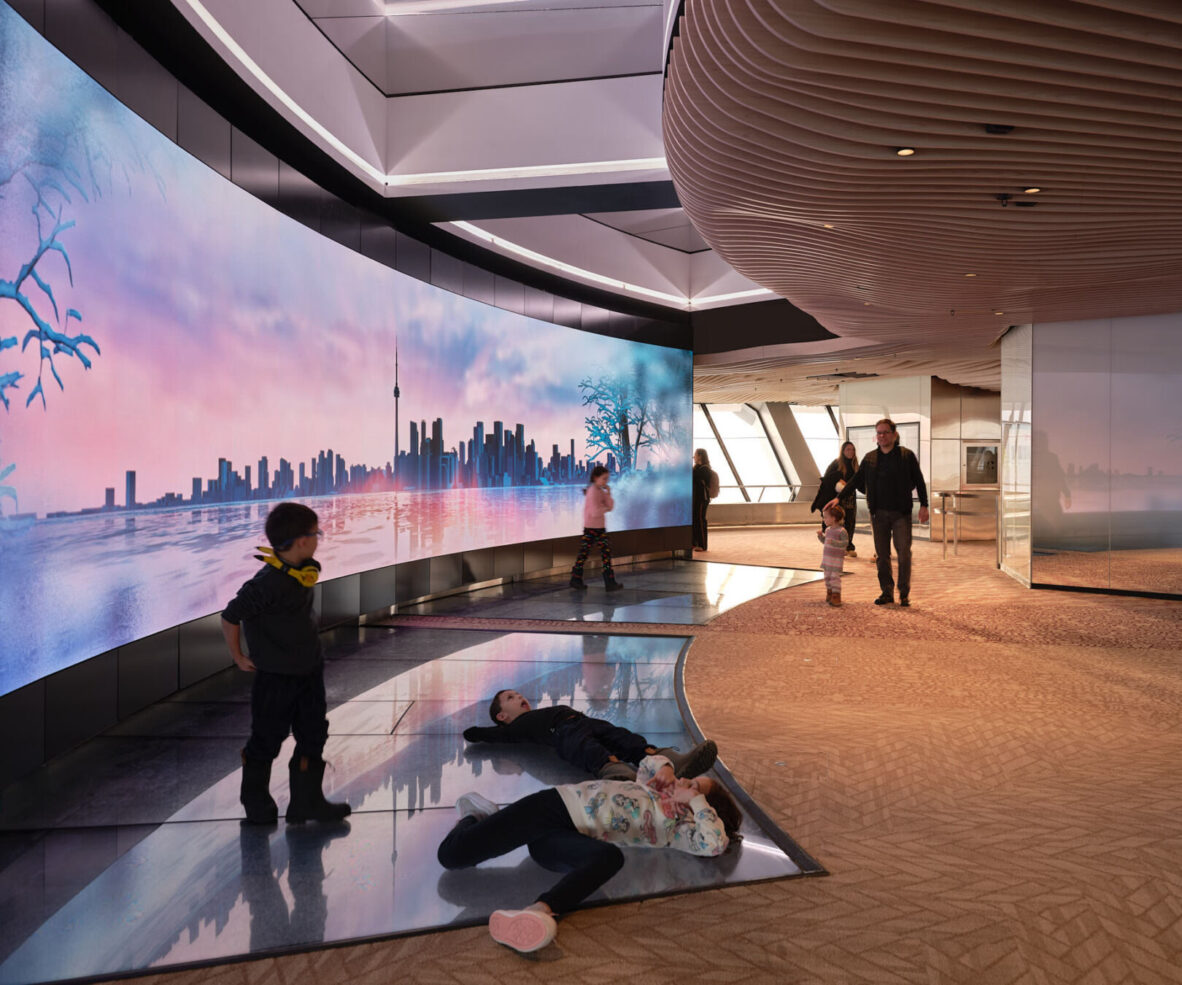
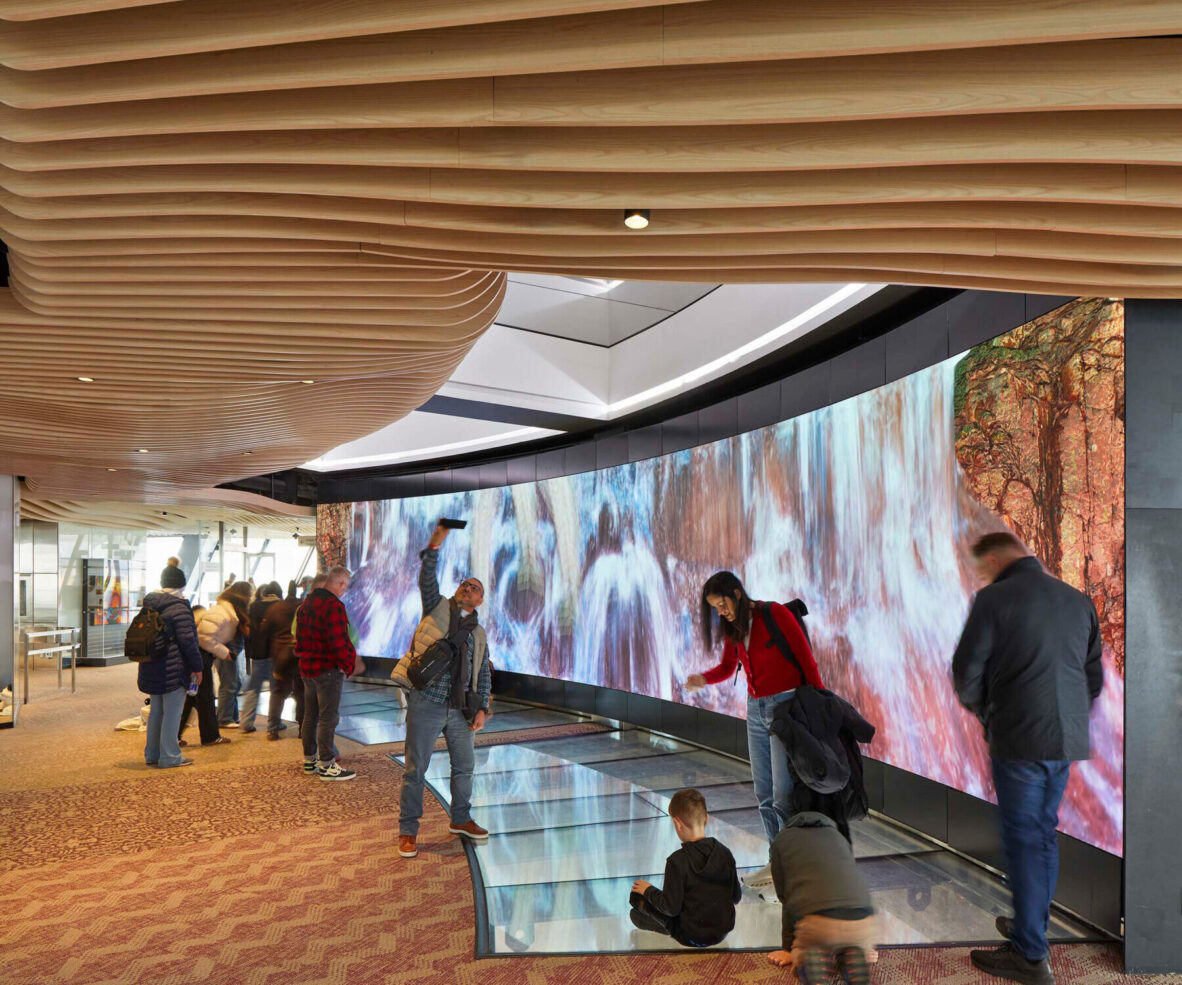
Genuine accessibility and inclusivity were paramount to our design strategy. Working with an accessibility specialist, we designed beyond best practices to provide physical, visual, and auditory accessibility that supports a diverse range of visitors and aligns with Rick Hansen Foundation Gold Certification standards. The physical design supports people in mobility devices and integrates immersive AV technologies: a 40-foot-long, floor-to-ceiling curved video wall as well as two 40-by-3.5-foot panoramic screens; three large-format interactive video displays with assistive listening systems via hearing-loop technology concealed in the floor to support visitors with hearing impairments; and satellite speakers that provide distributed sound.
The video wall was designed for Artmosphere, an immersive art program that showcases original works by Canadian and Indigenous artists. Curated by Ela Hulsti, the carpet features artwork inspired by the four sacred medicines of the medicine wheel — tobacco, sage, cedar, and sweet grass — encouraging visitors to pause, reflect, and honour Indigenous practices and ways of knowing.
Images: doublespace photography, Tom Arban, and Michael Davidson
Project
Information
Explore Projects